
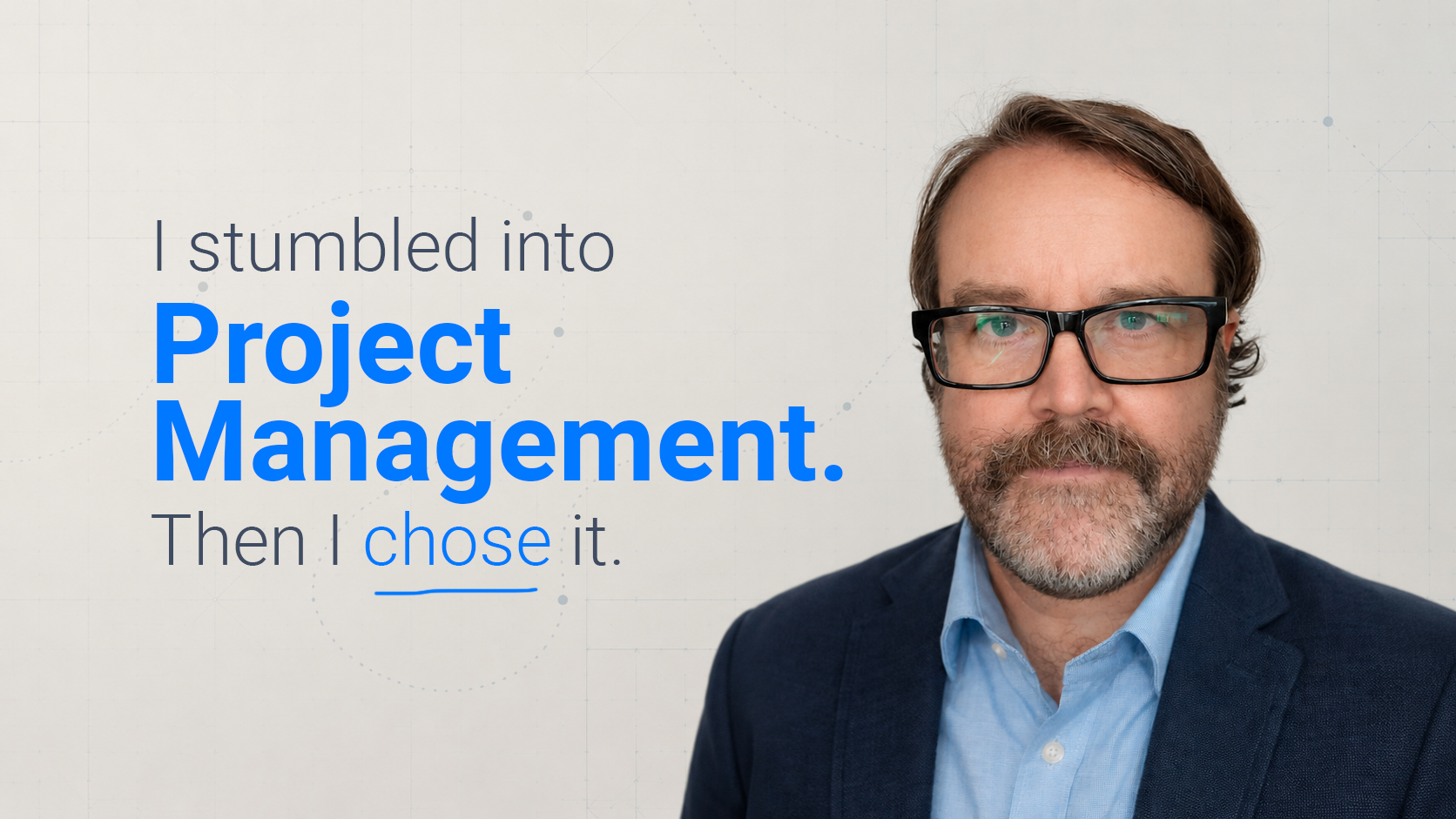
I Stumbled Into Project Management. Then I Chose It.
I did not set out to become a project manager.
There was no carefully mapped career plan, no early fascination with project schedules, and no moment when I decided that managing website projects would be my professional destination. Project management found me through a series of changes that, at the time, did not seem connected.
For approximately 13 years, my professional identity was rooted in graphic design. I learned to think visually, solve communication problems, interpret feedback, and recognize when something was technically complete but still was not working.
Design trained me to pay attention to hierarchy, consistency, usability, messaging, and the countless small decisions that determine whether the finished product feels intentional.
I assumed that was the career I would continue pursuing.
Then I moved, and the move required a different plan.
My Career path at a glance
Graphic Design
Approximately 13 years learning visual communication and problem solving (print and digital)
Business Ownership
A physically demanding sandblasting and industrial coatings venture started after relocating
Return to Design
A job search intended to take me back into the creative field prompts wide “cast net”
Project Management
An unexpected opportunity that gradually became a deliberate career I actually enjoy
An unexpected detour
To make the transition possible, I started a sandblasting business with a friend. It was a significant departure from graphic design, to put it mildly.
Instead of spending my days thinking about typography, layout, and brand consistency, I was doing physically demanding work built around equipment, preparation, repetition, and endurance.
The business did not develop into what we had hoped it would become. At the same time, the physical demands began taking a toll. Sandblasting requires repetitive movement and sustained physical effort. Eventually, my body made it clear that it was not something I could continue doing long term.
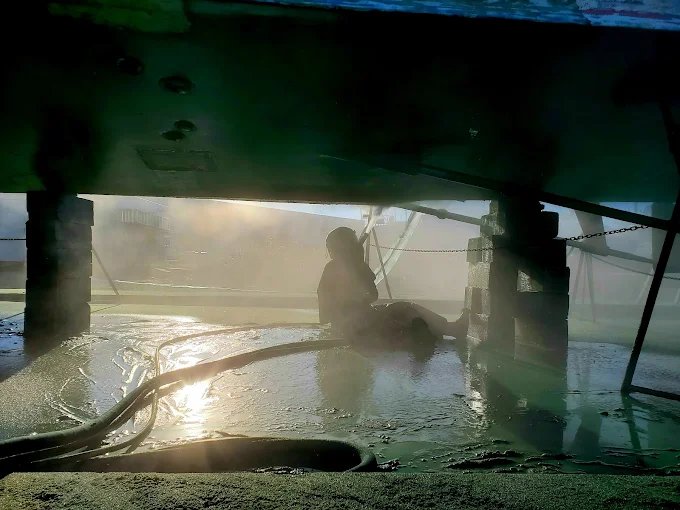
That chapter did not go according to plan. Still, I do not see it simply as wasted time or a wrong turn.
Starting a business carries its own education. It forces you to confront uncertainty, responsibility, limited resources, and the difference between having an idea and consistently delivering the work required to support it. Even though the business was not ultimately successful, the experience changed how I thought about work and responsibility.
When it became clear that I needed another direction, returning to graphic design seemed like the natural choice. It was the field I knew, the work I had spent years developing, and the professional identity that still made the most sense to me.
So I began looking for design positions. That was when someone approached me about becoming a project manager.
“I’m not a project manager”
My initial response was straightforward. I was not a project manager.
I had not held that title. I had not followed a traditional project-management career path. I saw myself as a graphic designer who was trying to return to graphic design.
The employer understood that. In fact, my design background was part of the reason for the conversation.
They were looking for someone who could manage projects while also bringing an experienced eye for creative quality. They believed my years in design could help me evaluate the work, communicate with creative teams, and recognize whether a project was producing something that would serve its intended purpose.
I accepted the opportunity, although I did not yet understand how much the role would ask me to learn.
My design experience did transfer into project management, but not as completely or automatically as I might have assumed. Recognizing good work is useful. Understanding how creative work is produced is useful. Being able to anticipate design problems, interpret feedback, and communicate with designers and developers is useful.
But those abilities are not the same as managing a project.
Project management required me to develop a different kind of judgment.
Learning without an established PM playbook
I also did not enter an established project-management department.
I was not joining a team of experienced PMs with mature systems, standardized practices, and senior project managers available to show me how the discipline worked. The company already had procedures for moving projects through the agency, and some of those procedures worked well. Others were shaped more by the company’s particular history and day-to-day needs than by established project-management practices.
That is not unusual in a small company. Processes often develop gradually as people respond to immediate needs. A procedure solves one problem, becomes part of the routine, and remains in place even when the projects around it become more complex.
My employer gave me an opportunity, a role, and real responsibility. The company also gave me exposure to the practical realities of creative project work. What it did not give me was a complete project-management education.
Much of that learning has been self-directed.
The role gave me real projects and real responsibility. The challenges pushed me to study the discipline, question existing processes and begin developing better ways to manage the work.
The challenges of the role kept showing me what I did not yet understand. A delayed project would lead me to examine dependencies and risk. A difficult approval would make me think more carefully about decision authority. Repeated design revisions would raise questions about quality standards, acceptance criteria, and the cost of rework. An unclear scope would expose the limits of managing from a task list without first establishing a shared understanding of the project.
Those experiences sent me looking for better answers.
What the Challenges Taught Me
The Challenge
Delayed Projects
What I Learned
Dependancies & Risk
The Challenge
Difficult Approvals
What I Learned
Decision Authority
The Challenge
Repeated Revisions
What I Learned
Quality Standards
The Challenge
Unclear Scope
What I Learned
Definition
I began studying project-management principles, comparing them with what I was encountering in real projects, and developing tools and frameworks to address the gaps I could see. I started asking not only, “What is our current process?” but also, “What problem is this process supposed to solve, and is it actually solving it?”
That difference has become important to me.
Following a procedure can keep work moving. Understanding why the procedure exists, what risk it controls, and when it may need to change is part of becoming a project manager.
Learning to see the whole project
As a designer, I was often focused on the work directly in front of me.
Is the hierarchy clear? Does the design support the message? Is the page visually balanced? Does the final product meet the expected level of quality?
As a project manager, the questions became broader.
What does the client actually need? Has the scope been understood consistently by everyone involved? Is the team waiting on a decision? Does the client know what is expected from them? Is a requested change simply an implementation detail, or does it affect scope, timing, cost, functionality, or strategy? Is the work ready to move forward, or are we creating problems that will surface later?
From a Designer’s Lens to a Project Manager’s Lens
Designer Lens
- Is the hierarchy clear?
- Does the design support the message?
- Is the page visually balanced?
- Does the final product meet the expected quality?
Project Manager Lens
- What does the client actually need?
- How well is scope understood?
- Who is waiting on a decision?
- Does this change affect timing, cost or strategy?
I began to understand that project management is not merely keeping a list of tasks and asking whether they are complete. It is the work of maintaining clarity while different people, priorities, dependencies, and constraints pull a project in different directions.
It also involves making judgment calls without always having perfect information.
That has been one of the most difficult and most valuable parts of my development. I naturally want to protect the work, honor commitments, and avoid making assumptions on someone else’s behalf. Those are responsible instincts. Experience has taught me, however, that even responsible instincts can be applied too rigidly.
Too much caution can slow a project unnecessarily. Too little caution can expose it to avoidable risk. Escalating every decision can become as unhelpful as escalating none of them.
The better question is not simply, “Should I ask or decide?” Instead, it’s, “What is the significance and risk of this decision, and who is best positioned to make it?”
The better question is often not, “Should I ask or decide?” Instead, it’s, “What is the significance and risk of this decision, and who is best positioned to make it?”
That kind of judgment did not arrive with the job title. I have had to develop it through real projects, mistaken calls, useful feedback, uncomfortable ambiguity, independent study, and a growing understanding of how creative work moves through an organization.
I am still developing it.
Why I am writing about the process
More than three years into this career, I no longer introduce myself by saying, “I’m not a project manager.”
I am one.
At the same time, I do not want to write about project management as though I have reached some professional finish line. I am not interested in presenting myself as an all-knowing expert with a universal formula for how every project should operate.
I am a practicing project manager who is deliberately digging deeper into the profession.
My education in the field has not come from being surrounded by a mature project-management organization that already had everything figured out. It has come from encountering difficult situations, recognizing gaps in my own understanding, studying the discipline, testing better approaches, and paying close attention to the results.
What I will be writing about
Creative project work
- Website Projects
- Creative operations
- Client communication
project decisions
- Scope
- Approvals
- Risk
- Prioritization
Improving Process
- Quality control
- Practical systems
- Organizational improvement
That is the perspective I can offer. This blog will explore that process.
Some posts will grow from mistakes I have made or distinctions I did not initially understand. Others will examine practices I am currently developing and questions I am still working through.
The goal is not to turn every experience into a rigid rule. Project work is too dependent on people, context, and competing pressures for that. Instead, I want to identify the practical questions, distinctions, and lightweight frameworks that can help project managers exercise better judgment.
I also want to be honest about professional growth without confusing honesty with self-disqualification. Acknowledging that I once misunderstood something does not erase the competence I have developed. It shows how that competence was built.
That is the mood I want these posts to carry: candid about what I am learning, confident about the lessons experience has taught me, and constructive about how individuals and organizations can improve.
An accidental beginning, but a deliberate direction
Looking back, the path from graphic design to sandblasting to project management still seems unlikely.
But it also makes a certain amount of sense.
Design taught me to care about quality and communication. Starting a business exposed me to risk, responsibility, and uncertainty. My current role has confronted me with the complexity of guiding work that depends on many people, decisions, and constraints.
I stumbled into the profession, but I am no longer approaching my growth in it accidentally.
Those experiences introduced me to project management. They also gave me a reason to begin studying it seriously.
I stumbled into the profession, but I am no longer approaching my growth in it accidentally.
This blog is where I intend to examine that growth: what I started out believing, where those instincts have sometimes failed me, what the work has prompted me to learn, and the more nuanced ways I am learning to think about project management.
Let’s Connect
If anything strikes a chord,
I’d like to know.
Ideas get better when they are shared.
Go ahead and reach out!
Curiosity is the beginning of every meaningful conversation
Someone (probably)